“I know the feeling,” our young driver Nikola said in his soft Italian accent on our drive to Pisa from Florence, Italy.
“Yup, my wallet flew into the night,” I repeated, shaking my head. Me, a veteran traveler fell victim to one of the oldest traditions Florence is also famous for. I wasn’t expecting for a young Italian man, a Roman no less, to have been the victim of the kind of petty crime that screws up the life of unsuspecting tourists for a few days.
Didn’t Italians have some kind of immunity? Some kind of internal safety mechanism, honor system from fellow residents?
No.
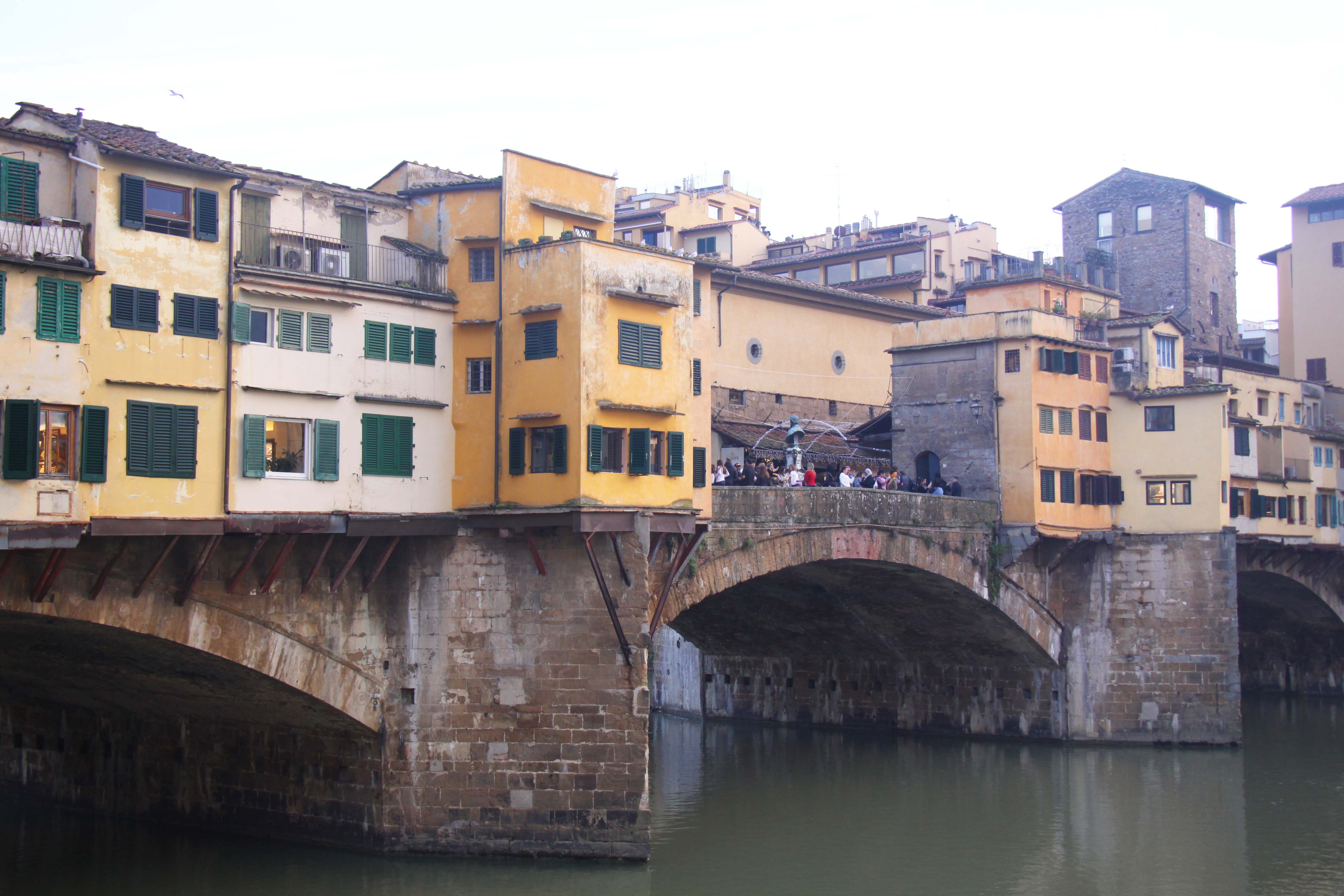
I don’t know the exact moment when my wallet was lifted. You’re not supposed to. I can only guess. Make an approximation of where it happened in a 45-minute period of time one evening. I wasn’t even alone. I was with my niece, just after the sun had gone down, out for a quick walk before dinner. We had crossed over the Ponte Vecchio and back again to check out a store near the Santa Maria Novella train station. I looked back. My bag was gapping open, the small pocket inside unzipped – and empty.
The thing that had never happened, had happened.
“You were just lucky all these years. Nothing is different,” an Italian later said to me.
“It’s not your fault. They’re good,” my mother said. She paused. “Now you have a story.”
I did. I went around admitting, confessing to anyone who would listen that I had been pickpocketed. Yes, me too, I’m one of those fools, I felt like I was saying every time I uttered the words out loud. Like that feeling of admitting that you had Covid in the beginning of the pandemic.
“My wallet got lifted!” I wrote to my Italian friend living in Verona.
There wasn’t much else to tell. Just that one evening I left the hotel with my wallet. And that I returned without it.
“Oh, I’m so sorry. That happened to me last summer. It takes forever to replace everything,” she replied.
I told my story to the woman in Alessi, the chocolate store in Florence, who has been in that shop for the two decades I’ve been traveling there.
“That’s happened to me two or three times. It’s not the money but the documents that take so much time to replace,” Julia said.
Two or three times?, I thought.
At dinner one night, a Florentine couple told us their daughter, their Italian daughter who grew up in Florence, had been pickpocketed for the day’s earnings from her bookstore. Only several hundred euros.
A beautiful Kenyan woman my mother befriended several years ago in a shop, Jaquelin, told us her bag was stolen right in front of her apartment when she put it down to unlock the door.
And one of the men at reception in our hotel, a man who is close to two meters tall, and beefy, had a phone stolen from a pocket.
The only link between most of these people was walking on the streets of Florence. And a network of fearless pickpockets. My typical list of reasons – I’m a small female tourist – was invalid. Everyone was a potential target in Florence.
Julia in the chocolate shop handed me the addresses of the carabinieri in Firenze.
“Go,” she said.
Italians must report an incident to the carabinieri to replace their driver’s license. I didn’t need the documentation to replace my driver’s license, but maybe for a claim on my travel insurance. I wasn’t naïve. I wasn’t even hopeful. My wallet wasn’t coming back. It was lying in a street somewhere, or a garbage can. Or it still is in someone’s pocket. If it did come back, the money would be gone.
I was just another statistic.
I spoke through the window to the man sitting in the glassed-in entrance to the carabinieri on Ogni Borgo Santo. He mumbled something. I asked again.
“Santa Maria Novella,” I heard.
So far I was managing. The office near Santa Maria Novella was for reporting robberies. I found the building, entered and took a seat for my free lesson in Italian and Italians. For almost an hour, I sat there, translating the words of a woman whose bag had been stolen, until another officer came out.
“What are you here for?” he asked the handful of people who had accumulated over time.
“Il mio portofoglio è rubato,” I managed to say in Italian. “My wallet was stolen.”
“They took it from your backpack?” he asked, making a motion with his hand of lifting something out of a backpack.
“Yes.”
“Where?”
“Il Ponte Vecchio.”
He shook his head yes, maybe adding up in his head the number of pickpocketed people in Firenze he had spoken with on that day alone.
“It happens all the time.”
A rite of passage, I thought.
“Come on back.”
We sat down in an office he shared with another officer.
“How many cards? What kind of cards? How much money?”
My Italian fell apart, and the conversation continued in English. He typed my words into his computer in Italian, ran the paragraph through Google Translate and then pasted the results in both Italian and English in a form I could use as proof of the crime.
“Arrivederici,” he said.
“Ciao, grazie,” I said, thinking I hope I don’t have to see you again.
“You can’t sleep. You go over and over it in your head,” Nikola said two days later on our drive to Pisa.
“It happened to me after I had been living in Florence for a while. I knew when I came here that the city was famous for pickpockets, so I was careful. But at some point, I became more relaxed, and it was at this point that my wallet was lifted. Somehow they just know.”
I was rubbing salt into an old wound. But I was also discovering I wasn’t the sole victim of the ruthless Florentine pickpockets, it can happen to anyone, and my hurt pride was a symptom of the affliction.
Jaquelin saw things differently.
“You did nothing wrong. It is the person who stole from you who is bad.” And then she uttered a colorful phrase I had learned as a child from my father who refused to speak to us in his first language, a Sicilian dialect, but taught us the bad words anyway because he wouldn’t say them in English.
She was right. But the problem was as Nikola said – I had become complacent.
“You’ve got to have four eyes and looking all around you all the time,” the concierge with a man bun at our hotel said, twisting his head from side to side, making jujitsu motions to back off.
I had broken my own rules I’d become so accustomed to I forgot them. And that was after a Pugliese man lectured me on protecting myself from pickpockets. He wagged his finger at a man walking in front of us whose phone was in his back pocket. “No, no, no. This is not how you do it.”
I had been careless. My mother on our trip two years before had not been. She was carrying a thin, folding purse, the size of a large wallet, close to her body. And yet, they plucked the bills right out of the middle of her purse. They couldn’t have done it without some kind of specialized tool, like Acme tweezers for pickpockets.
Nikola had the generosity to call his pickpocket “a gentleman.” The thief had dropped off his wallet at the carabinieri the same day it had been stolen.
“My wallet was waiting for me at the carabinieri. The money was gone, but my other documents were still there.”
The best I could do was confess the sins of my pickpocket upon entering each magnificent cathedral after that.
“It wasn’t as bad as the time my car got stolen,” I said to my niece at the end of the day. My great take-away from the incident. Or incidents. No one pushed me, or my mother. No one pulled a gun on either of us.
Pickpocketed twice, once each time on our last two visits to Florence. I wondered out loud if I would come back to a city, the site of so much Pugi pizza and shop people who have become friends. The constant threat of pickpockets added to the overall evolution of the city into the takeover by the biggest of fashion brands you can buy anywhere, cheap pizza and artisanal gelato that isn’t, driven by crowds of people everywhere, from everywhere, at all hours in the city center.
“Do not let one experience color your impression of all the rest of the wonderful experiences you’ve had in Florence,” Jaquelin told us. “Please come back.”
I gotta hand it to these pickpockets – they’re skilled. You don’t know they’ve been into your stuff. In the USA, or in Los Angeles, robberies can have a violent ending. I believe it happened that evening because someone saw me put my wallet away when I left the hotel, and either followed me, or phoned or texted ahead to someone else. It’s tough to know how to protect your belongings. You go through every scenario and then they think of one you wouldn’t have thought of.
How this problem has reached a pinnacle that it’s almost a predictable event in your trip to Florence, or Italy, is the result of many intersecting factors. The most impossible to fight is the downside of today’s technology. I can text my mother a photo of a restaurant she might want to eat at in Florence, while pickpockets can send a text to their colleagues of me the target.
Or they go to Pickpocket University, or the internet, to study the design of different style backpacks and the methods to use to get into them. And pickpockets might not be who you suspect. They might even dress in business apparel and wander around in museums.
The pickpocket didn’t get much cash from me. And very little of it was in euros. I had the sense to separate out most of my bills. But I no longer had any credit or debit cards, which costs much more than they took to cancel and replace.
If I’d followed my usual protocol, they would have caused less trauma. I usually separate out my cards, keeping only the one I use in my wallet. I didn’t do that. And I didn’t lock my backpack.
“Try to wear your backpack on the front,” my Italian friend in Verona said.
I hadn’t done that either.
My nephew advocated for carrying no cards and using Apple Pay.
“I never carry any cards,” he said.
Overall, Apple Pay, or the equivalent, is safer to use for a variety of reasons. I like the idea, but then your cards are all in one place again. And now they steal smart phones and can get into them. Or it might just die.
All I can do is emphasize to people to keep your valuables close to your body, keep a list of what’s in there. I started carrying a backpack because I have several pairs of glasses I wear. I got lazy about carrying it on my back. And my wallet, bought two years before in a shop on the Ponte Vecchio, was made of silver colored leather, flashing like a sign in my backpack, “Here I am. Take me, take me.”
I guess the life of my wallet ended where it began.
My mother gifted me a new sparkly Italian made wallet – maybe I haven’t learned anything – and I now know how to say my wallet was stolen in Italian.
I hope, I hope I don’t have to use those words again, in any language.
Books…
Norwegian Lessons in Indonesia (2023)
An Accidental Artist: Discovering Creativity through Scuba Diving (2018)
Art for sale at AnemoneWatch on Square
 Janice Nigro
Leave a comment