In December of 2019, I made a deposit on a dive trip on a liveaboard to the Banda Sea in Indonesia for September of 2020. Adios to my deposit, I thought just a few months later when the lockdowns began. I’d said yes to a destination I’d been to twice before – a destination with a difficult crossing during which a fire broke out on the boat on one of the trips – because my French speaking friends from a spectacular trip to Alor, Indonesia in 2018 were going. And they asked me to join them.
I wrote my deposit off the longer the lockdowns went on. But that’s not the way things worked out. Dan and Claudine, the couple who own the business Abyss Ocean World, offered to return the money, minus a fee which was a bit less than half of the money. I decided to leave my money with them because well, the money was already there. I thought, I’m going to ride this out. At the very worst, the deposit would be my donation during the pandemic to a small business, one I at least had a personal connection to.
By September of 2021, when Indonesia opened again, I had a severe case of lethargy. I was so used to not traveling, anywhere, I started to think what a hassle it is to travel. For a time, it was, considering immunity status and testing for Covid before flights. I made a weak effort to contact my wonderful Swiss roommate from the Alor trip. When I didn’t hear from her (I think she never received my email), I used it as an excuse to put off any decision making until Claudine suggested I take a trip through North Sulawesi, Passport to Paradise, one the French were going on in March 2024. They did make it on the planned trip to the Banda Sea, but two years later in September 2022. I opted to apply my deposit to a different trip because Claudine told me I could.
The thing I liked about this plan best of all? I would wait another year before I had to go.
This trip to North Sulawesi in March 2024 was the version that came out of that deposit from 2019. A land-based dive trip covering three different areas and three different resorts. I didn’t think much about the significance of staying at three resorts until I had to pack, and then I realized the effort it would take to move us from one resort to another after we’d been underwater with our dive gear. As opposed to a liveaboard where you don’t have to move your stuff for two weeks. The boat moves you.
Even with a year to plan, I only finalized my flights and my stay in Singapore about 10 weeks before I left for Indonesia. Just a few months before, I’d had a trip to Europe that for the most part had been great, but a couple of blips – an historic snowstorm and a two and half week baggage delay – made me not want to travel, ever again. Or at least for a while. When it’s down to the last few months, you just have to get the credit card out and do it. I added a few extra days to visit friends in Singapore, made my plane reservations, got my equipment serviced and checked that the parts to my camera rig still worked.
Then I counted down the days. Threw my dive clothes – you know those clothes reserved for wear only on dive trips – into the bag along with my equipment. And I starved myself in the weeks before just enough for my wetsuit to still fit (although that’s debatable).
The most I did otherwise to prepare was print out the brochure of the trip. Did I read it? No. I knew enough to know something about the diving, but not the resorts. I’d been diving near all the areas before, but I had stayed at other resorts. So I knew the diving was going to be great and I was going to be with a great group of people, even if I didn’t speak their language. I also liked this plan because I could fly direct to Manado, the main city in North Sulawesi, on a subsidiary of Singapore Airlines, SCOOT. I could avoid domestic Indonesian airlines and flight routes, a gigantic plus.
The other plus this time was a direct flight from LAX to Singapore. 17 hours straight on a plane though. There’s no good alternative. Stopping somewhere in between adds more time, and fares with a stopover were not less expensive, at least not by much.
I had to stay one night in Singapore before flying to Manado. I booked a hotel near the airport instead of staying with my friends. It would have been just as easy to stay with them, but I didn’t want to overstay my welcome. I relaxed about booking a hotel for one night in Singapore, only to discover that the prices increased about 2-fold from just one week to the next. I decided to take a look at what was going on in Singapore. Yup, Taylor Swift would be performing a series of concerts in Singapore at the same time (and yes, my sister checked to see if any tickets were available). When I arrived at my hotel, some young women from China were already dressed in sequins at 10:30 in the morning for the concert taking place that night. Only one spoke a few words of English, and I wondered at that moment exactly what is it about Taylor Swift that she has such a universal appeal.
Sitting in front of my gate at Changi the next morning, I met a Canadian man, a young guy who had just flown in from Thailand.
“I didn’t book a room before I arrived last night. And all I got at the hostel was a bed in a 10-bed room for 50 dollars, all because of Taylor Swift,” he complained.
I hadn’t prompted him. The Taylor Swift phenomenon is real.
So I landed in Manado, and Ano from Murex Manado was waiting in front of the Sam Ratulangi International Airport with a sign with my name on it. Ano spoke a little English, English he said he learned from Netflix. We mostly traded dialogue through Google Translate and a Siri-like translating app, that didn’t understand me at all, on the drive to the resort through the city which sometimes you think isn’t really a city. It’s a jungle, colored a green that I only see come out of a tube of paint. The kind of place where people must fight back against the flora.
I arrived a day early, one day before everyone else. Some glitch in booking the flight from Singapore to Manado while in Los Angeles that I haven’t quite figured out yet. Maybe something to do with the International Dateline. Lucky for me as I had one day to test my equipment and then to discover I left some key parts to my camera at home. An extra day gave me time to set in motion a person to person hand-off delivery of those parts.
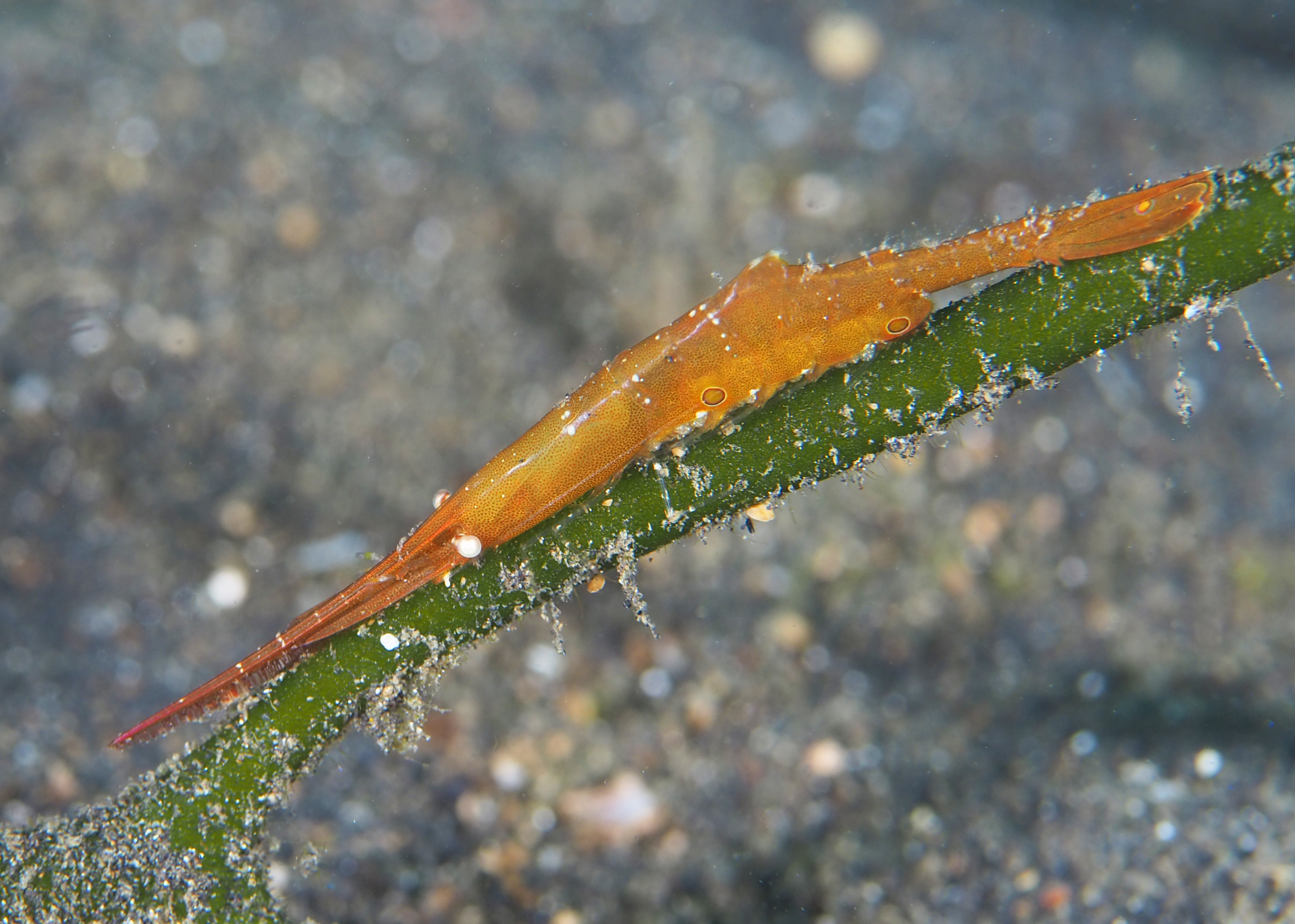
I’d been diving in all the areas on the itinerary 10 years before. I’d stayed 10 days on Gangga, another island in the area, and at Kungkungan, a resort on Lembeh Strait across from the one we would stay at. I knew some of the dive sites and the type of diving. Most of the diving in Lembeh Strait is muck diving made famous by an American, Mark Ecenbarger, who owned Kungkungan, a resort that did not reopen after the lockdowns. Muck dives are dark and murky, in the sand, and you think there’s nothing to find. But you’re wrong. Squid, cuttlefish (all sorts), weird shrimp, octopuses, nudibranchs and thorny seahorses inhabit these areas. You just have to find them. Photos can be disappointing if the lighting isn’t right because many critters have evolved to look like the benthic habitat they live in, and there’s no color in the background.
The sites at other resorts were wall and/or sandy slope dives. Soft coral in a rainbow of colors and sun all around. I stopped counting the turtles swimming into our territory at an area called Bunaken.
A few hours before we left the last resort on Bangka Island, the third dive guide, Jhun said to me, “It’s too bad you’re not staying longer. There are so many great dive sites and critters to see here.”
Thank you, Jhun, for making it even harder to leave Bangka Island.
A special bond develops between dive guides and divers. Or I imagine it. You know, that you are the best guest they’ve ever had to guide, and they will never forget you. But really the next week they are doing the same thing with the next group of divers. I don’t know why this happens. I’m going to go with the idea that a physiological biochemical event promotes this feeling. A surge of dopamine, or who knows oxytocin when you are diving, and poof, like magic, you perceive a special bond.
Although we moved among three resorts, our three dive guides stayed with us. They traveled with us to the next resort via a tour of a volcano and associated sulfur stinking lakes, and an open air market where I could have bought roasted or raw dog. Yes, we went to an open air market with a wet market area. I could buy a fresh python filet on my trip, but not postcards! I picked one row of the wet market area and ran through it in less than 10 seconds, holding my breath (it’s an open air market), to say I’d been there. But such a high concentration of gleeful butchers at the wet market made me reconsider eating meat of any kind at all.
We spent most of our time examining the piles of beans, chili peppers, and fresh fruits available. One of the guests from Quebec bought what seemed like a magic bag of snake fruit. He was handing them out to everyone, and yet, the bag never seemed to become empty.
I could have bought whole bags of exotic herbs, like kaffir lime leaves or nutmeg, which is the second most important commodity for the area, for a few dollars. But who am I kidding? I’d never use them. You have big ideas about reproducing food of the local culture at home. But the recipes just never taste the same. Maybe something to do with the ingredients that grow locally. Or the fragrance of the air. Or the fact that I have no idea how to cook Indonesian food.
The cherry on top of the Hawaiian toast was the fresh baked pancakes made of palm sugar, rice flour and cinnamon stuffed with chocolate, peanuts and coconut, or pineapple.
Claudine and I had Jefry as our dive guide. For all 13 days. I did one dive, my check out dive, with Sandro (he was Indonesian, not Italian) on my first day, who was also excellent.
Dive guides could probably watch a movie while they wait for guests to take photos underwater. But no, they help you set up and even encourage you to relax and take photos. Or just find something else even more unusual for you to look at. At the end of the dive day, Jefry handed me his slate with a list of the critters we saw, including the Latin names of all the nudibranchs, and we saw “a lot of nudibranchs.” Jefry even agreed to take me on afternoon house reef dives when I was the only diver. And on the last day on Bangka Island, he fit in a dive with me early before he left just moments after completing the dive.
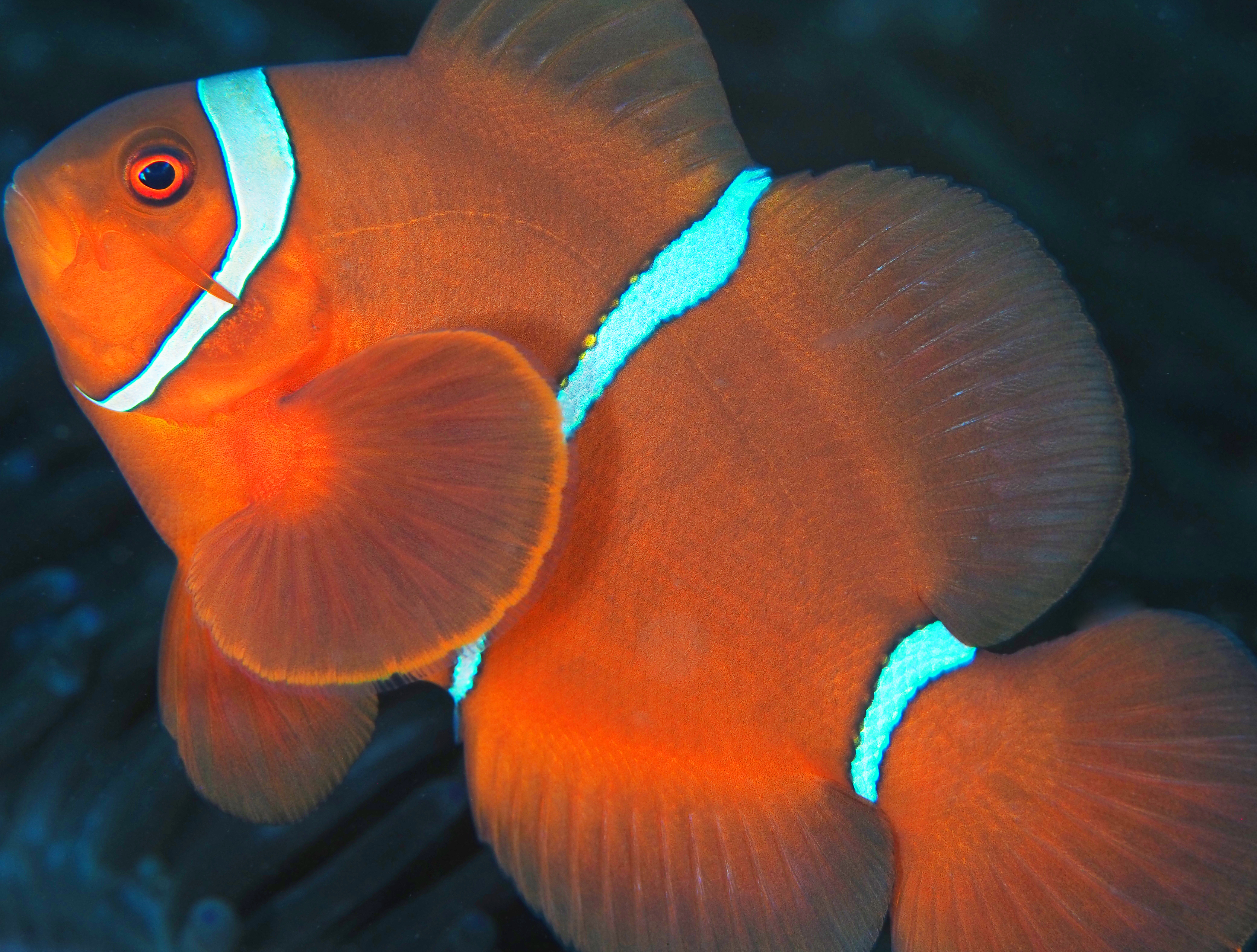
He knew me by then and said, “We can do the house reef and look at just anemones.”
Until the last minute, he was pointing out different anemones, even a false anemone, and helped me to photograph the tiniest of nudibranchs. But he must have sensed my frustration with photographing the anemonefish. When I looked over at his slate at one point on that last dive, there was a message for me.
“Pretend to be a hard coral.”
I got the message, but didn’t know exactly how to act like a hard coral. I did try, which is also funny – we were on the house reef and not that deep so there was some current – and I wondered if he was laughing as hard as I was at myself.
Claudine is a fantastic trip leader and the best roommate. This trip was the third time I’ve traveled with her. She takes a two-second shower – although this isn’t what makes her a great roommate. It’s that she takes care of her guests and shares the details of her life as if she’s known them forever. Whether she knows it or not, I think she found what she was born to do already early in her life. She’s one of those people who helps you create the kind of memories you don’t even know you can wish for.
The proof was when we reported on what she calls the highs and lows of the day at dinner. It’s a fun and funny exercise, but she does it to inform her what we liked or didn’t like in part to determine how to improve their trips for the future. In the process, it creates a sense of connection.
An example of my highs was having to reach Lembeh Resort by boat. Something good is happening if you can only reach your destination by boat. It got better a few days later, when not only did we travel to the third resort on Bangka Island by boat, but we also did two dives on the way.
That day might be the best travel day I’ve ever had.
My low was always, “My photography isn’t working.”
I started to call it my “luxury low” because when that’s your low, it’s still unbelievable.
“When the rig takes over your mood, then it’s time to throw it out,” said Chris, the manager at Murex Bangka, the last resort.
I finally realized what my problem was on the last day and wrote down my settings for next time. Still a step forward, albeit a bit too late for the trip.
The lows for other guests were the trash on the bottom in Lembeh Strait (which for muck sites was pristine – another famous muck diving area is like an underwater dump which is hard to dive in because you’re afraid of getting infected with some out of control bacteria, but then again as Claudine said, “The critters thrive in it.”), a long day of travel over the mountain from one resort to the next, or the unexpected down current on the second day of diving.
Or there wasn’t a low.
Two of the resorts I would classify as rustic. A handful of cows even grazed on the extended property of one of them. You shower outdoors (although the best resorts in French Polynesia are designed similarly). Termites in the ceiling might leave the feeling of sand on a certain spot in your cottage, even when you know they’ve just cleaned your room. And insects that sound like the garbage trucks backing up at home on the streets of Los Angeles signal the beginning of the night and serenade you into your sleep. But they have air-conditioning and the waves are just a couple meters away.
The third one, upscale. But there was a price. Or perhaps some kind of internal control. The upscale resort was built into the side of Lembeh Island. Only one way to reach your cottage – almost 80 stairs to reach our place – (and yes, your luggage has get up there and down again), but then we had an unhindered view of the ocean below from our balcony. Lembeh Resort served a breakfast buffet, a lunch buffet and then a four-course dinner. Every day, after piling the food on our plates at lunch, we put in our orders for dinner. Climbing the stairs wasn’t enough. On the third day there, I started to skip the soup course and asked for a fresh fruit plate instead of the dessert for dinner.
I always expect to be fed enough food, but that it competes with some of the best meals I’ve had worldwide was an unexpected discovery of the dive business in Indonesia. Then again what doesn’t taste better cooked in coconut milk? Or grilled inside of bamboo stalks?
But I could easily go vegetarian there. The last resort – the most remote (which served the least variety of food of the three resorts) served a salad dish I won’t forget, karedok – cabbage and cucumbers tossed in peanut sauce. It was so good, I asked to have karedok leftovers from lunch for dinner.
I asked a young man named Hanok (“Sounds like hammock,” he said.) if the resort grew any of the produce served. Because the eggplant was so sweet, without any bitter taste.
“No. Just coconuts. I think we only grow coconuts,” he said. “And those are free.”
I’d recommend any of the resorts on the basis of the graciousness of everyone on the staff. I’d left a couple of basic parts to my camera rig at home. I sent a message on Instagram to the second resort, knowing it had a photo center, to ask if I could get the parts replaced. They could. And they were delivered to me the old-fashioned way. From the resort on Lembeh Island to someone on the main island to someone’s sister to someone who worked at the resort. Across the water and over a mountain. Or something like that. A good old-fashioned hand-to-hand transfer that took a couple days to reach me, “only because it is Sunday,” Pim at Murex Manado said. But that I could replace them at all was a small miracle.
If I had to complain about anything, it would be that I don’t understand French. French I gave up on learning long ago, and I was even a little rusty at hearing the French speak English. I had no idea what one of the guys was talking about when he asked, “ ‘ave you been on a ‘ike?” It took me a couple of tries before I realized he was saying hike.
I am surprised at how much the French Canadians prefer to speak French over English. But that’s an obnoxious American thing to think when the mother tongue of most people, even on this side of the world, is not English. At the end of our stay at Lembeh Resort, Claudine told me that the French were always commenting on how much food I took at meals. And yet, I didn’t look big enough to be eating that amount. I didn’t think the French even noticed me sitting at the end of the table.
What I could understand was the laughter, and the French laughed a lot.
Any effort to acquire new language skills was focused on Indonesian. I had a year to work on the language (and my camera), but I left it all until I got there. Unfortunately, the words of a language leave your brain faster than it takes to get them in there when you leave a country, even one you’ve spent a lot of time speaking. Then like magic something happens when you return. The words pop back into your consciousness. I started to remember how to say small things like good morning or good afternoon, or “I’m good” and the number one.
I don’t know if I will remember it, but the Indonesians at Lembeh Resort helped me to ask for my fried egg over easy at breakfast in their language. Satu telur mata sapi bolek bali (or this is what it sounds like), one egg fried, over easy. Mata sapi actually means cow eye. I then discovered fried egg, sunny-side up, is called many different names around the world.
Claudine speaks Bahasa Indonesia, well enough to understand the differences in the spoken language across the country. The Manadoese, Claudine claims, speak the prettiest form of Bahasa Indonesia. I couldn’t tell the difference, but I caught on to one of their colloquialisms. “Sama sama” which means “you’re welcome”, in Manadoese is “sama dua”, which means “sama two”. At the airport on the way out, when the attendant checking passports said thank you, I replied, “Sama dua.”
He gave me a thumbs up and a big smile.
You have to leave islands the same way you get on them, by boat. So the dream is not over until the wheels of your flight have left the ground.
Every time I go, I’m surprised that more people I know have never been to Indonesia. It’s so far away from anything I know, but there’s not one thing you miss. But that’s because the staff – an international mix, including people from the USA, the Netherlands, and South Africa – at the resorts make it so easy for you to be there.
“I feel like time went so slowly on this trip,” Claudine said.
Maybe we just entered another dimension. You put yourself on an airplane that crosses over the dateline, 17 hours of flight over three days. Add a little bit of turbulence – maybe your brain is just scrambled.
In short, I’m so glad I went. For all my worry, for all my procrastination, I’m sorry I waited so long to go diving again.
Well, that’s a wrap for Taking French Lessons in Indonesia 2. I’m hoping there is Taking French Lessons in Indonesia 3.
Books…
Norwegian Lessons in Indonesia (2023)
An Accidental Artist: Discovering Creativity through Scuba Diving (2018)
Art for sale at AnemoneWatch on Square


Leave a Reply